Glossary – Individual Defense (See Skill Analysis)
- Athletic Position (See Defense Drill #1): Feet parallel (hip width apart), knees slightly bent (1/4 squat aka peak power position), staying on “the balls (forefoot)” of your feet, leaning slightly forward, with head/chest up, abdominals flexed (as if about to be punched in the stomach), a “neutral spine” and your “shoulders set.”
- Neutral Spine: A “normal curve” or slight concave in the lower back.
- Scapular Set/"Shoulders Set": A positioning of the shoulder blades (scapula) whereby the shoulder blades are rotated back, together and down (simultaneously).
- Holding The Stick/Alternate Grip/“Lax” Grip: Beginning players should be instructed to hold their stick with an “alternate” (“lax” grip), on whatever side of their body feels the most natural. The bottom hand of the player should grasp the stick using an overhand grip while holding onto the knob (“butt-end”) at the bottom of the stick. The top hand holds the stick using an underhand grip, approximately shoulder-width apart away from the bottom hand (See Passing & Catching Skills Analysis).
- "Two Hands": Players on defense (and offense) should keep two hands on the stick as much as possible and should avoid the habit of taking one hand off of the stick unnecessarily.
- Defensive Players/"Team Defenders"/Defensive Specialists/"Shut-Down" Defenders (See Defensive Skills Analysis): The number one goal of any defender is not to get scored on, as a team first and foremost, but also individually either on-ball or off-ball.
- “Egg & Spooner”/“Stay Home” Defender: Beginners and experienced defenders with poor stick skills are sometimes referred to as “egg & spooners,” which in some instances describes the way they look when running with the ball; in other words, very little “cradling” and lacking “ball protection.” These players are at risk of getting “stripped” and need to be supported with good “outlets” wherever possible.
- Communication/Talking/Miscommunication(See Defense Drill #11): The #1 key to defensive success is communication. If you don’t talk, you will not be successful as a defensive player. There are hundreds of terms related to defense in this glossary, so there is no excuse for not talking. Not talking which results in a breakdown, is otherwise known as a "miscommunication."
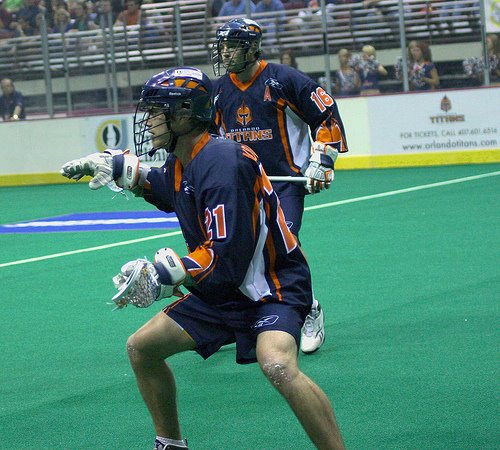
- Awareness/“Read & React”/Recognizing/Decision Making (See Defense Drill #15B): Players need to “read” the situation at all times on both offense and defense: “taking inventory,” following “principles” and communicating, while at the same time “making decisions” and “reacting” to the actions of the opponent.
- Match-Ups/“Assignments”/Proper Defensive Side: At the more advanced levels of lacrosse, coaches will often employ predetermined “match-ups” of size-on-size and speed-on-speed, responsibilities which should be communicated and implemented on the floor by defensive players. Offensive players should try to exploit any “mismatches” in this regard, wherever possible. Otherwise, defenders with a match-up assignment generally don't switch checks ("stay"); only out of desperation, or if the assignment involves several defenders matching up against the weak-side or strong-side.
- Check/Checking (See Cradling Drill #4): A “check” is a term for a player that someone is matched up against while playing defense. Usually it’s the player that is closest to you on the opposing team who is considered your “check,” but this needs to be communicated to avoid potential “breakdowns.”
- Clamping (See Defense Drill #10): The act of placing the head of the "stick" over top of an offensive player’s stick. This is a good habit to get into when offensive players cut to the net looking for a pass, off-ball, and also adjacent, while generally following the 2-for-1 Rule.
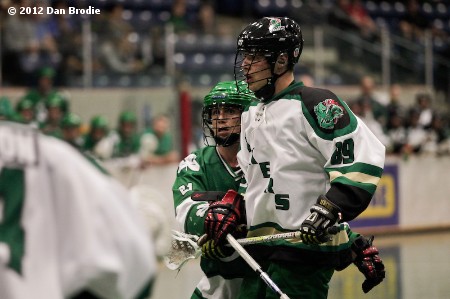
- Footwork/Quick Feet/Body Positioning (See Defense Drill #6): Good footwork combined with good cross-checking/slashing technique is the essence of fundamental defense in lacrosse. It is important to understand good defensive floor position, which is a relative concept depending on a variety of situations. Beating an opponent to a vulnerable area/spot on the floor (or to a loose ball) is usually the primary concern (“body position”) both defensively and offensively, while also understanding angles and “threatening” situations (playing the "percentages").
- Shadowing/Covering/Guarding/"Man-To-Man" (See Defense Drill #3A & #3B): "Shadowing" a check is to mirror the movements of an offender in reverse order (offender goes forward, defender goes backward, etc.), from various distance, at the same time maintaining top-side position, as offensive players become a threat. On-ball, at times defenders will initiate contact with the opponents body/stick when they are vulnerable, generally staying about a sticks length away.
- Square/Facing/Facing Away: When a player is “square” to something, they are “facing” it directly (hips parallel); when they have their back to something they are “facing away.”
- Top-Side Positioning/Top-Side Defense/“Hips To The Boards” (See Defense Drill #6): Towards the middle of the floor. Defensive players try to take away (“deny”) top-side and offensive players should try to get over top, in order to get quality shots on goal (see prime scoring area). "Top-side positioning" refers to a defender’s feet/hips being in line with the opponent’s top shoulder (relative to their stick) “over-playing” their top-side with a “closed stance.” Their body should be positioned in the “shooting lane,” with their “stick up” and forcing offenders to carry the ball “underneath” the defense, eventually pushing them into the crease.
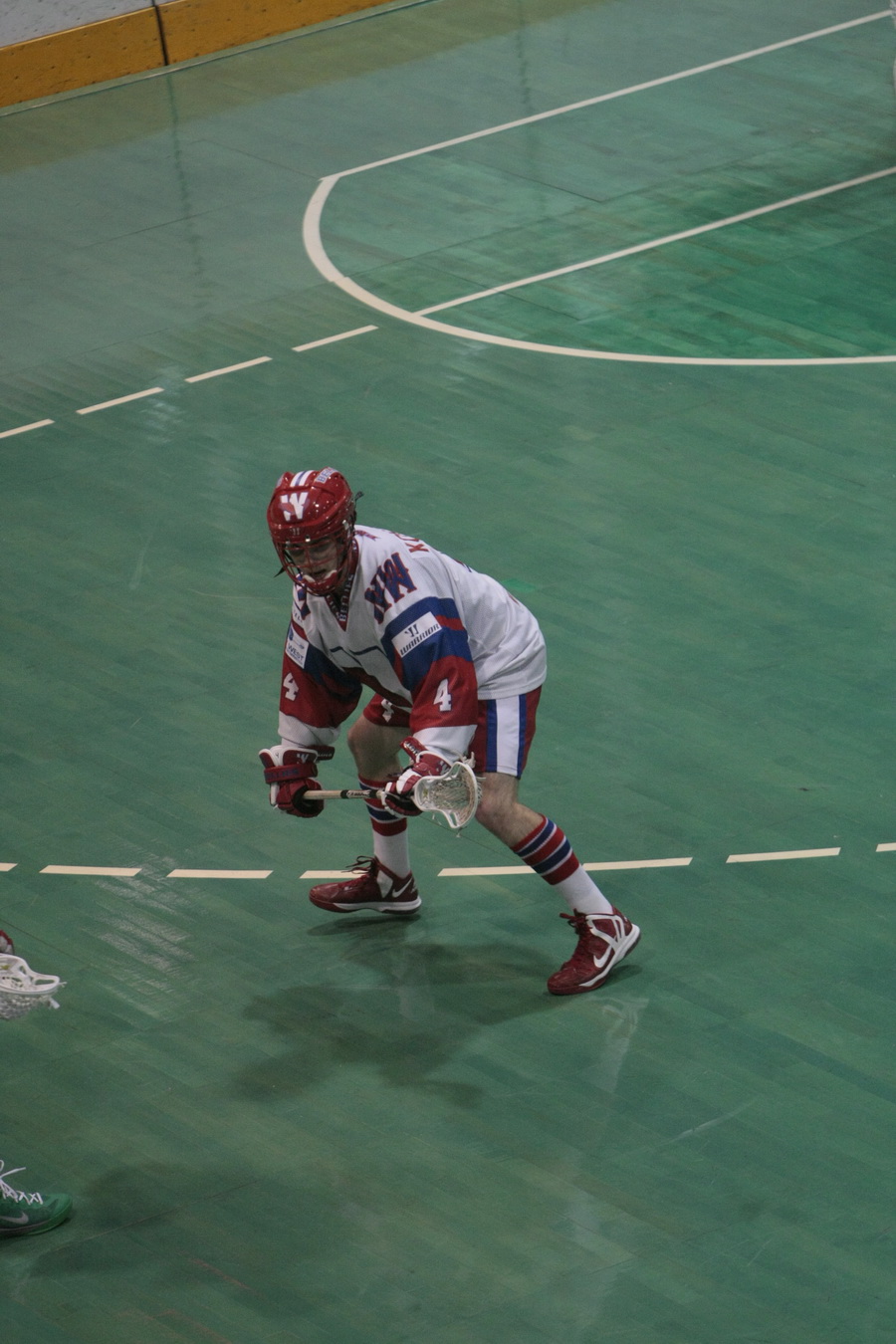
- Closed Stance (See Defense Drill #3A): When checking an opponent(s) on-ball, the defender(s) should have their hips facing the boards and in line with the offender’s top shoulder, in an effort to force them underneath and to deny top-side. Picks are much easier to see and switches are much easier to execute while in a closed stance as well, provided defenders’ heads are on a swivel and picks are well communicated.
- Open Stance (See Defense Drill #3B): When a defensive player faces up-floor in a position to see both the ball and their check from the off-ball side of the floor (see 2-for-1 rule), they are doing so from an “open stance.”
- Shooting Lanes/Blocking Shots/"Soaking" A Shot (See Defense Drill #4): A defensive player must be able to position themselves to take away “seam shots” by an offensive player without “screening” the goalie (see “goalie communication”). Players should be in a “closed stance” and overplaying the offensive player’s stick (between their stick and the net), at the same time closing the gap on the shooter as best as possible.
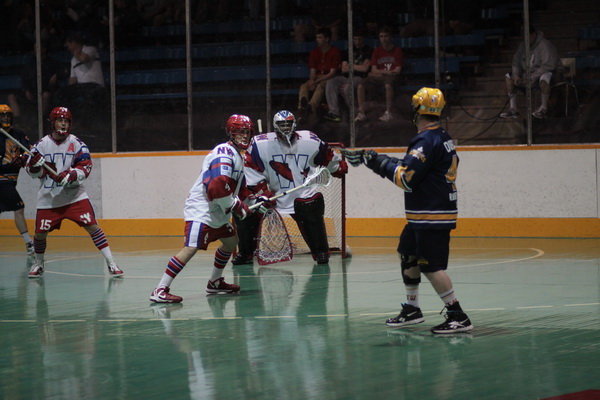
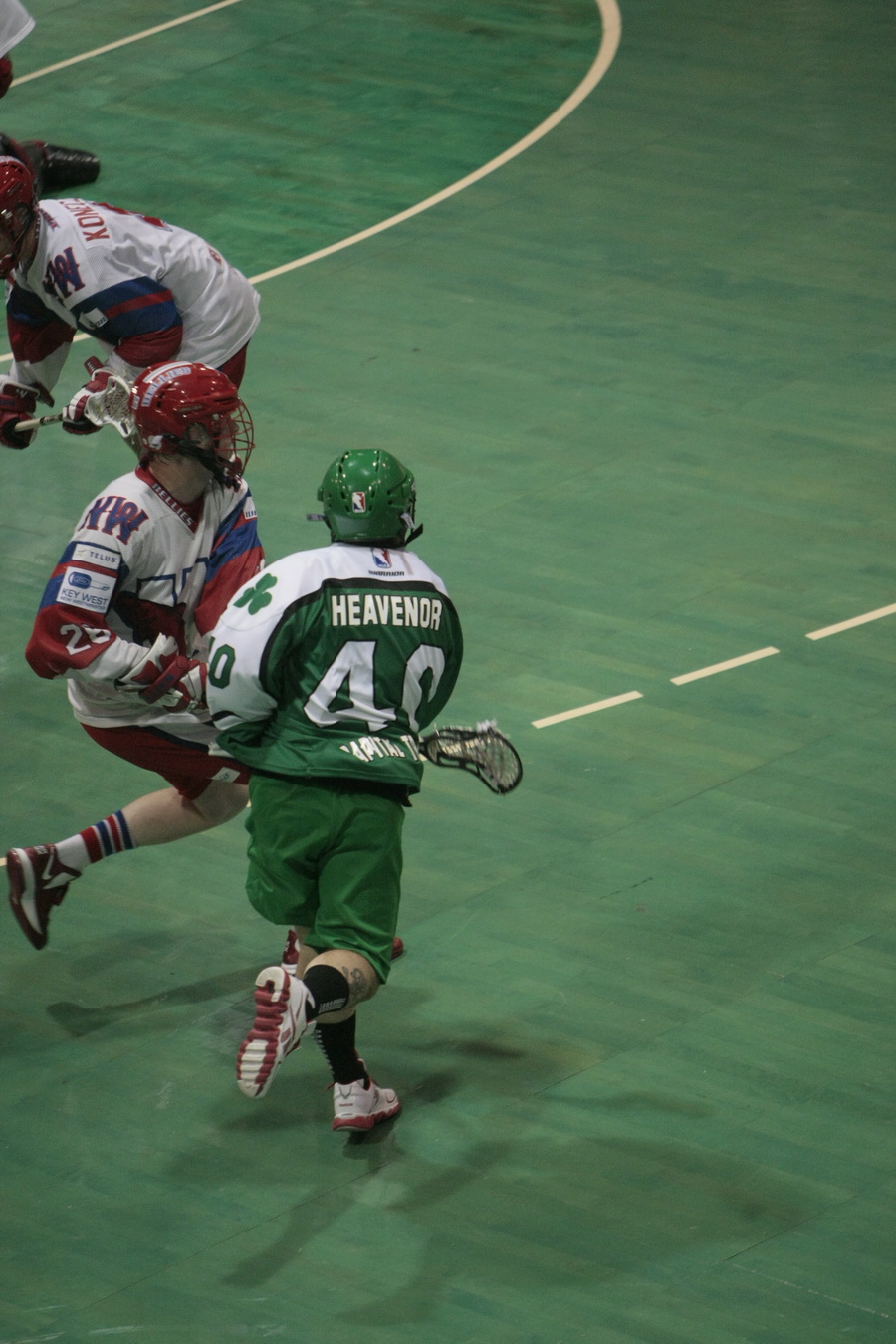
- Passing Lanes (See Defense Drill #2): It is not only up to the player with the ball to safely “feed” the “receiver;” the receiver must also help create a safe “passing lane,” which often requires two players being in motion. Having sticks up and in the passing lanes is therefore an integral part of any defense, but especially important when playing within a zone defense.
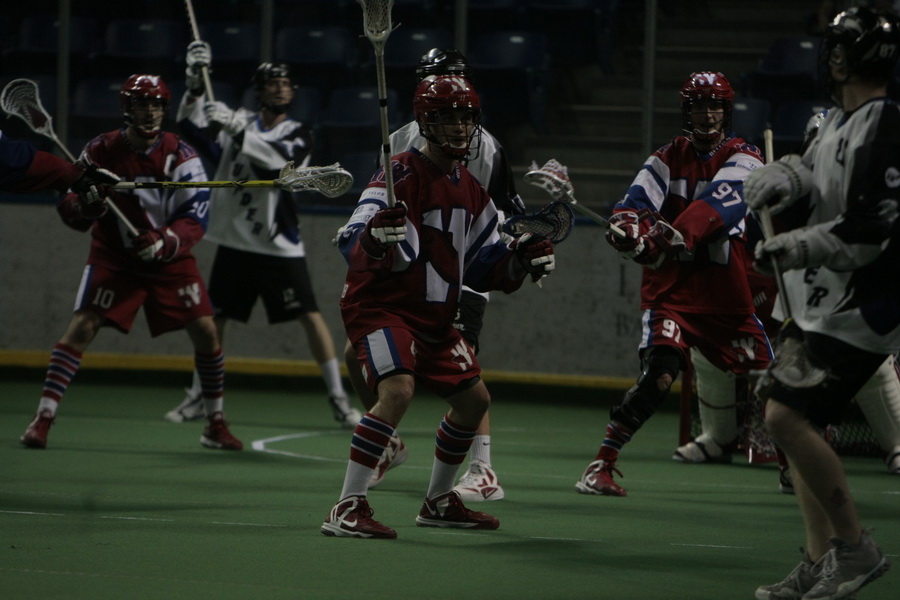
- Head On A Swivel/“2-For-1 Rule" (See Defense Drill #13A): Looking all around and being aware of what is happening on both sides of the floor while playing offense or defense. Offensively it means to observe the position of the ball and constantly be aware of being ready to receive a pass. Speaking to defense, beginning defenders should go by the “2-for-1 rule,” while off-ball in an open stance: two looks to your check for every one look towards the ball.
- Sticks Up/Knocking Down Passes/Window Washing (See Defense Drill #2): Sticks should be “up” in the air wherever possible while playing defense, which takes away clear passing lanes, knocks down/intercepts passes, and makes it difficult for shots to get through to the net (block shots).
- “Pick-Off”/Interception (See Defense Drill #2): A turnover created by a defensive player who intercepts a pass between two offensive players, which usually also results in a fast-break in transition.
- Ball Watching: When an off-ball defender gets caught watching the ball carrier rather than their own check. This usually results in a quality scoring opportunity on a back-door cut by smart offensive players.
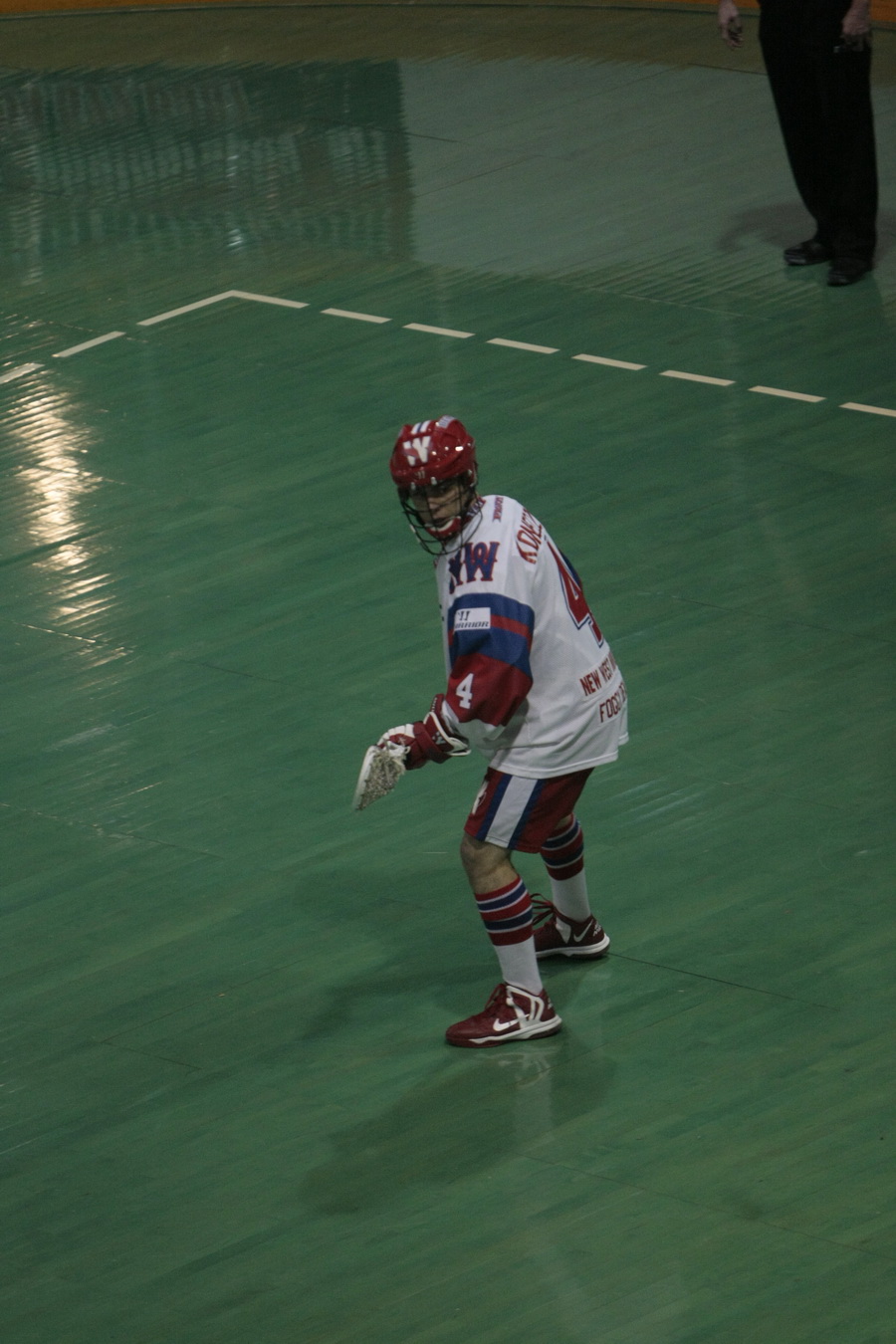
- Running/Sprinting/Full Speed/Standing Still: The method of locomotion most often used on the floor. Players should run with two hands on the stick the majority of the time while on offense, or in transition, unless “one-handed cradling.” Defensively players should have two hands on their stick the large majority of the time as well, with a few exceptions such as “poke checks,” “trail checks,” “keeping balls alive,” and deceptively while “turn & clamping.”
- Back-Pedaling (See Defense Drill #1): Basic footwork, usually by a defender, characterized by straight backward movement while staying face forward; the opposite of running. Players should get as low as possible to the ground, using long powerful strides and keeping their chest/head up to back-pedal most effectively.
- Side-Shuffling/“Half-Step” Side-Shuffle/Shuffle Steps (See Defense Drill #1): Basic footwork, usually by a defender, characterized by lateral (sideways) movement from a low athletic position.
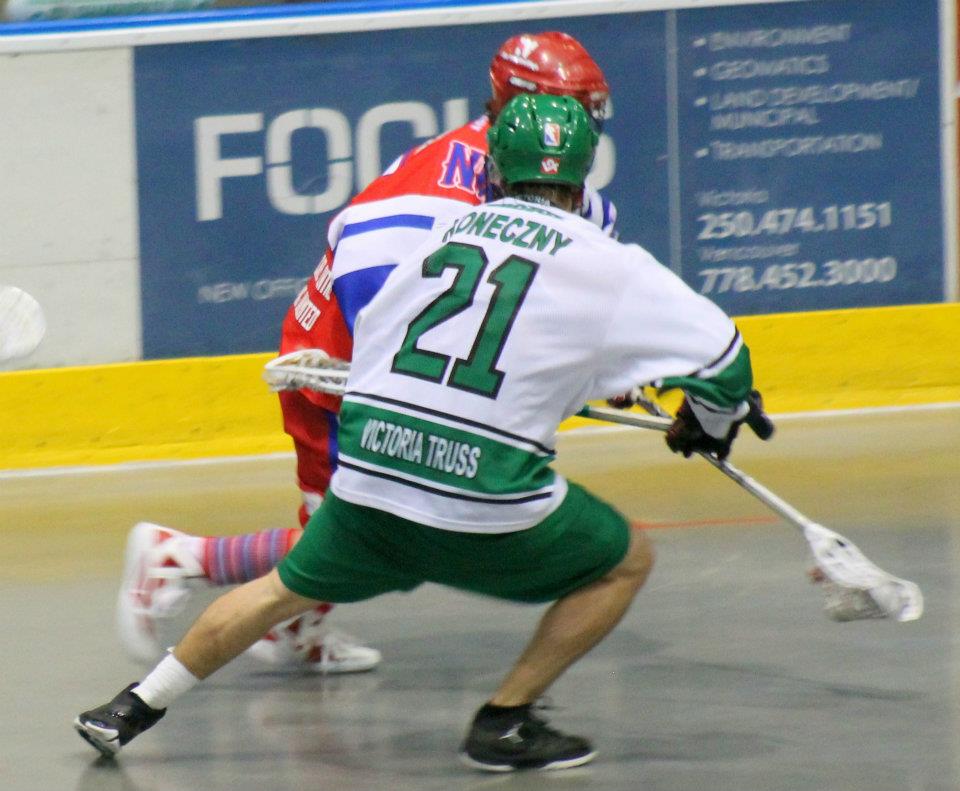
- “Carioca”: Is a footwork pattern that coaches can use during practice or training. It involves facing perpendicular to the direction being traveled and placing one foot in front, and then behind the other leg, while moving laterally.
- “Figure-8” (See Stickwork Drill #7): This is a footwork pattern often used in drills during practice, but elements of the figure-8 pattern are used all of the time during games as well. This pattern is utilized by both offensive and defensive players while avoiding obstacles that interfere with players' taking care of their responsibilities. Players are usually facing up-floor while utilizing a figure-8 pattern, and therefore should do the same while practicing (making sure to keep their head up) at full speed (all directions).
- Drop-Step/Pivot/Change Of Direction/Defensive Spin/Inside Roll: When the ball carrier changes direction or gets over the top-side, defenders need to swing a foot backwards, opening up their hips and running “hip-to-hip” to cut off the ball carrier in the direction that they have taken to the net.
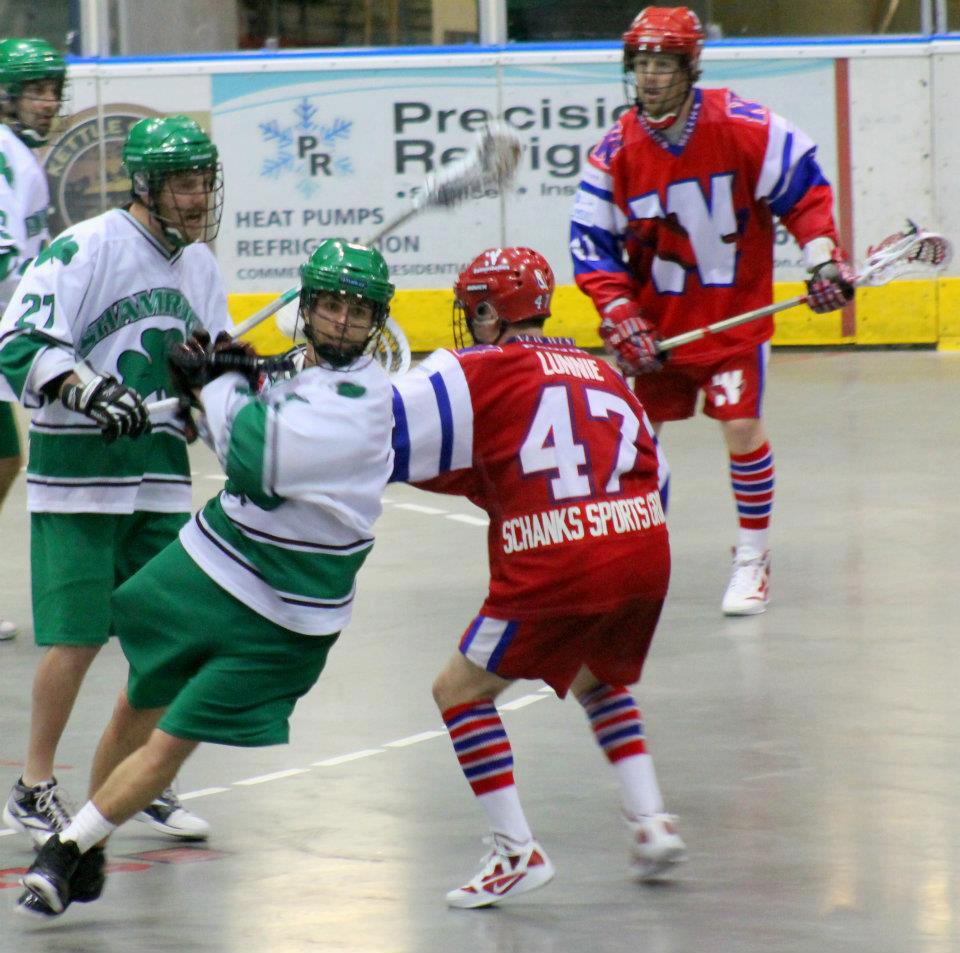
- Circling (See Loose Ball Drill #4): A footwork pattern generally used when defending a post-up from a bigger player (“fronting”), fighting over top of a seal (see defensive spin) or to in any other way establish position (deceive) against the opponent. Circling could also mean to run quickly around the crease (net), or to circle around pylons in drills during practice or training.
- “Tracking” Backward/Forward (See Cradling Drill #4): A footwork pattern generally used in the open-floor by a defender that is shadowing their check. “Tracking” backwards is a drop-step back toward ones own goal, a few side-shuffles left, then a 180° drop step right, with more side-shuffles; changing directions every time the offender switches running direction. It is similar, in a sense, to a zig-zag movement pattern.
- Open-Floor Checking (See Transition Drill #5A): Whether applying Full-Floor on-ball pressure or defending off-ball (as well a host of other scenarios), open floor checking requires defenders to “track” their opponent, eventually running hip-to-hip if their check gets a head start in either direction (left or right).
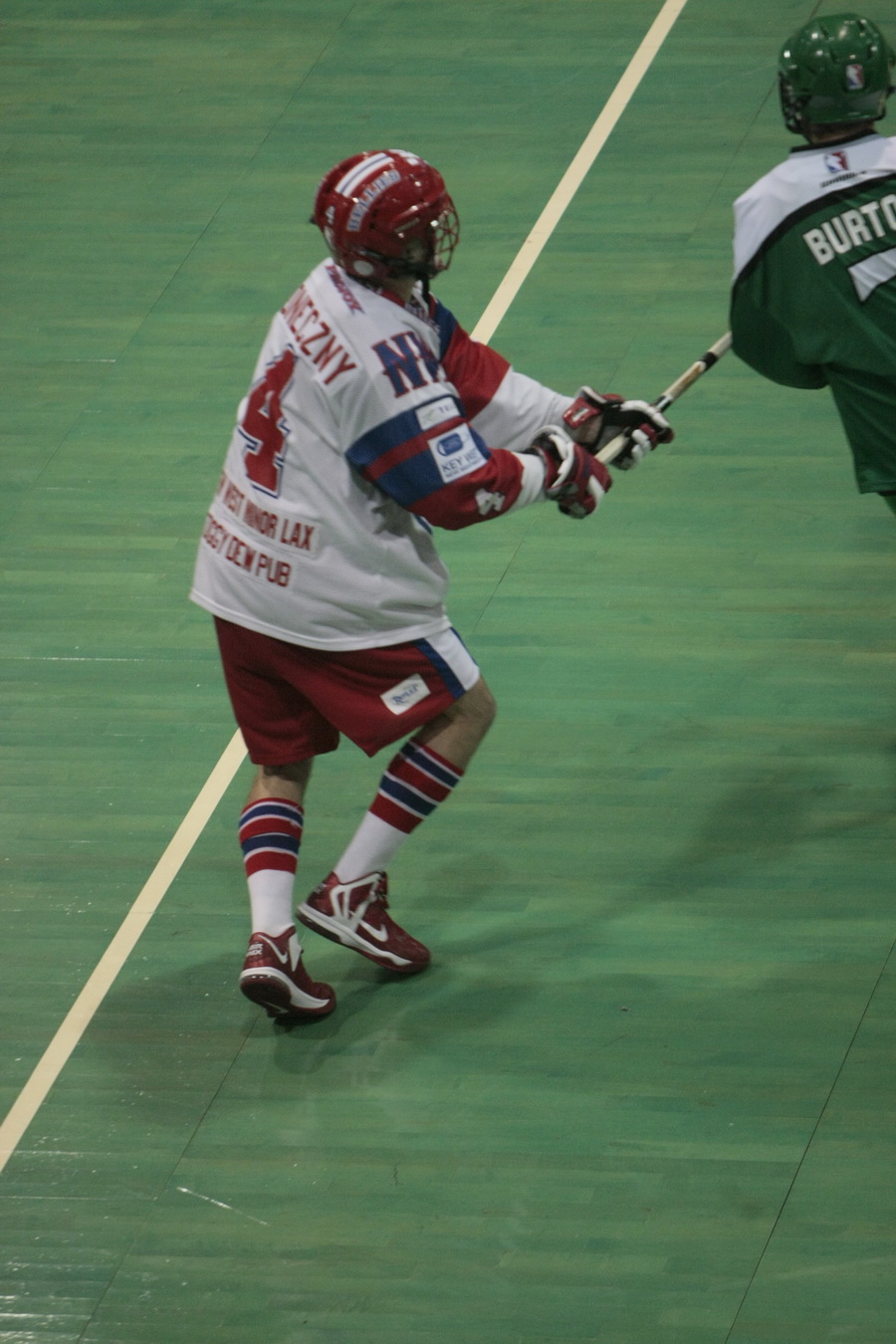
- Hip-To-Hip (See Defense Drill #7): When an offensive player cuts, and it is no longer possible to keep position by "side-shuffling," defenders must drop-step and begin to run "hip-to-hip" (side-by-side) beside their check.
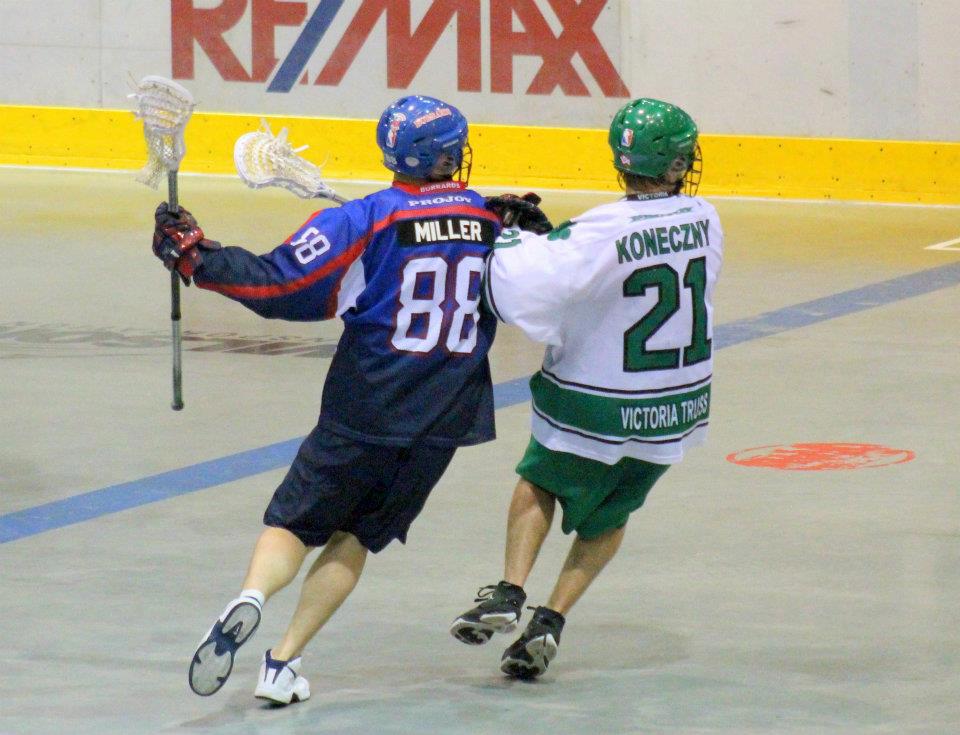
- Pursuing/50-50 Balls (See Loose Ball Drill #6): If a player thinks they can arrive at a loose ball before or at the same time as an opponent, they should “pursue” the loose ball with as much effort as possible; the only exception being the 1-for-1 rule.
- Keeping The Ball Alive/Battling (See Loose Ball Drill #10): The biggest determining factor in getting a loose ball is effort. “Battling” to keep the ball loose for oneself or a teammate is just as important as actually picking the ball up itself. Often big “scrums” for the ball will develop as players continue to “keep the ball alive” in an effort to retain possession of the ball (especially off of face-offs).
- Scrums/Traffic (See Loose Ball Drill #11): Scrums are when multiple players from both teams are eagerly pursuing a loose ball, usually keeping the ball alive a few times before picking up the loose ball. Traffic is when there are one or more players in the way on a loose ball, or screen shot.
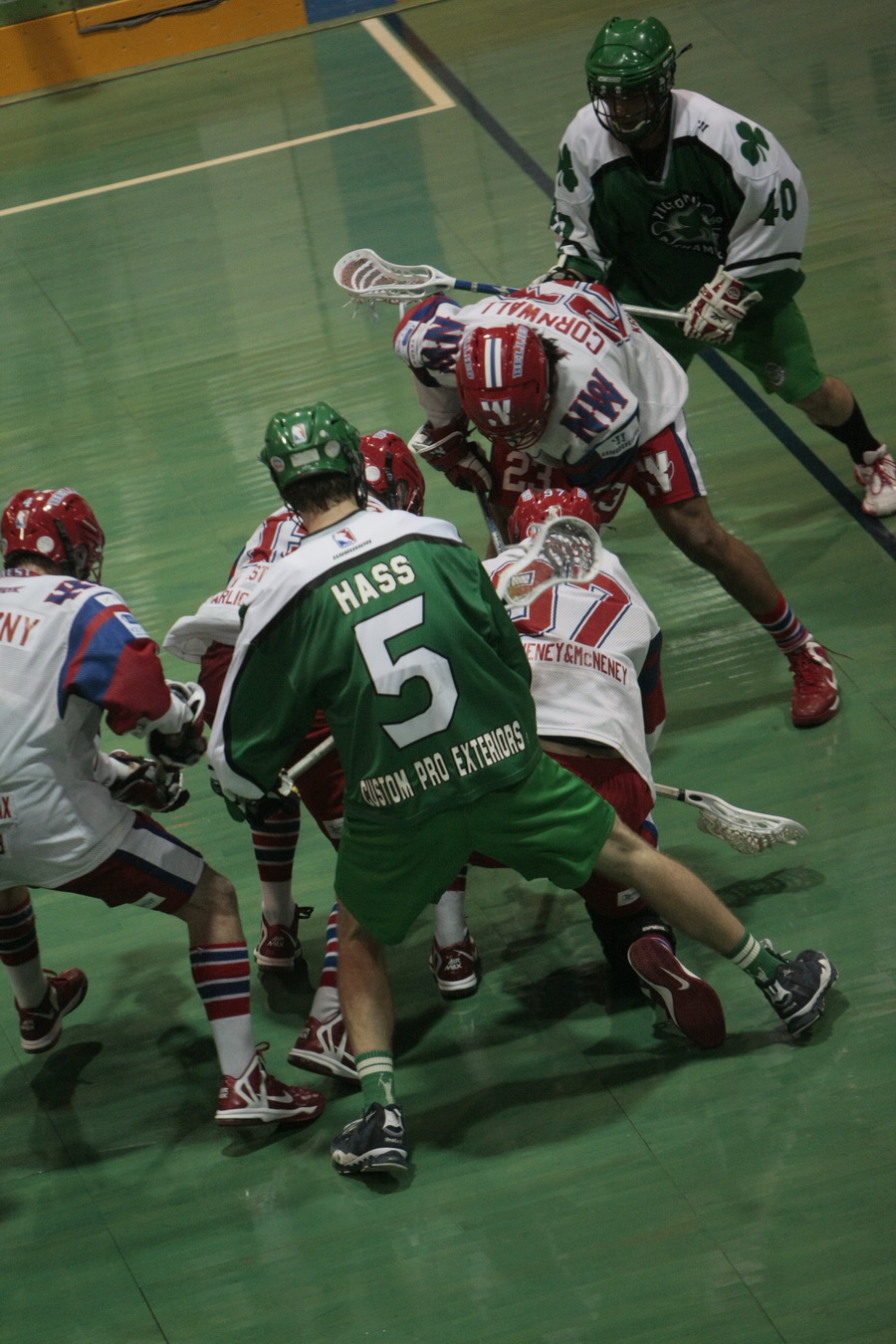
- “1-For-1” Rule/90%: Unless at a numerical advantage in overall number of players on the floor (i.e. power-play), defenders should never leave their check to join a scrum or line change if the numbers are even, unless their check joins the scrum or line changes first (in which case the defensive player should still be on the defensive side of their check).
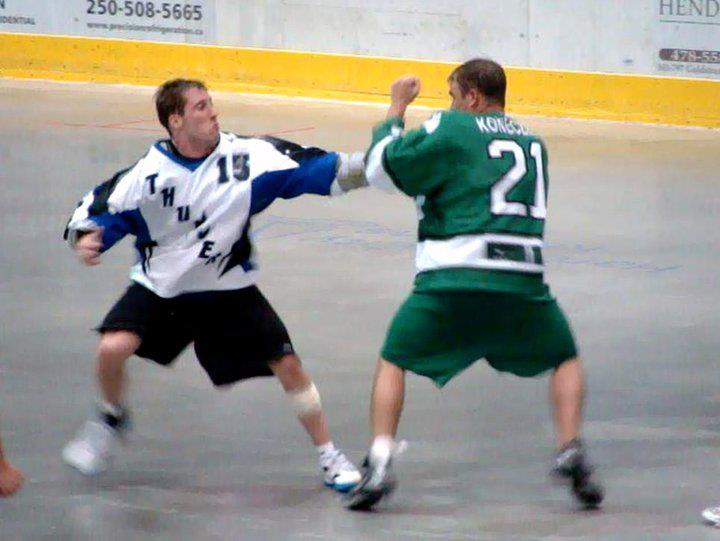
- Giving It Back/“Mixing It Up”/“Churping”/Cheap Shots/Sending A Message/Fighting/“Turtling”: Although this a controversial subject for many, it must be addressed because of its relevance in our sport and as it relates to player safety. Players uninterested in fighting shouldn’t “churp” (make verbal slanders) or take “cheap shots” at an opponent; otherwise they are attracting/inviting the retribution of the opposing team. Some players might do these sorts of things to try to frustrate or physically intimidate the opponent, but they need to be prepared to receive it back, otherwise they risk getting hurt.
- “Eating” The Ball/Mucking The Ball (See Defense Drill #5A): There are certain times during a lacrosse game when not picking up a loose ball is sometimes a smarter play than picking it up (also known as “eating the ball”). This type of situation usually occurs during a “red call,” when the opposing team’s shot clock has less than 5 seconds left on it. If a defender picks up the ball and possesses it for even a half-second, then gets stripped, the player is at risk of giving the other team an easy “multiple re-set” situation. It would therefore be smarter for that player to just keep the ball alive, box-out their check, and not pick it up (ensuring that the shot clock expires). Kicking it along the boards, “batting-it” down the floor, or any other tactic that doesn’t allow the opponent to retrieve the ball, is usually best (unless there is a potential fast-break with a player cheating).
- “Batting” The Ball (See Loose Ball Drill #2): This refers to players hitting the ball with their stick while it is on the floor in a loose ball situation, and shouldn’t be encouraged for the most part, as it is usually better to just pick up the ball. However, when “mucking the ball” and sometimes during scrums, “batting” the ball to open space can be a good play.
- “Hucking” The Ball/Icing The Ball/Dumping The Ball (See Playbook): Rarely if ever should a player “huck” a ball the length of the floor, but a few circumstances where it does happen include: out of desperation, throwing it back to one’s own end while being pressured after a face-off (see “batting” the ball), late in the shot clock or when “dumping” it to open space and out of harm’s way (i.e. late in a game).
- Denying/"Over-Playing:" Following your check tightly wherever they go on the floor so that they are unable to receive a pass, or establishing body position that dictates where an opponent can/cannot go.
- Locking Off/“Anchoring" (See Defense Drill #3B): Placing yourself between the ball carrier and your check, ideally with your stick on their gloves; effectively “denying” one’s check from receiving a skip pass from the far-side (i.e. locking off the crease players on a short-handed).
- Fronting (See Stickwork Drill #8): This is a technique used to defend against a mismatch when an offender is trying to “post up” on a smaller defender. The “low” defenders cannot allow themselves to get sealed behind the back of the offender, attempting instead to “fight over top” and get “on the hands” of the offensive player as best as possible. If defensive players see a teammate getting "posted up" they can also attempt to “double-team” if the opportunity presents itself, otherwise “show help.”
- Boxing-Out (See Defense Drill #5B): When the opposing team shoots the ball it is the responsibility of all defensive players to control their check before attempting to corral a loose ball off of a rebound, especially the defenders who are checking the crease players. “Boxing-out” literally means to establish body position between the ball and the person challenging for possession.
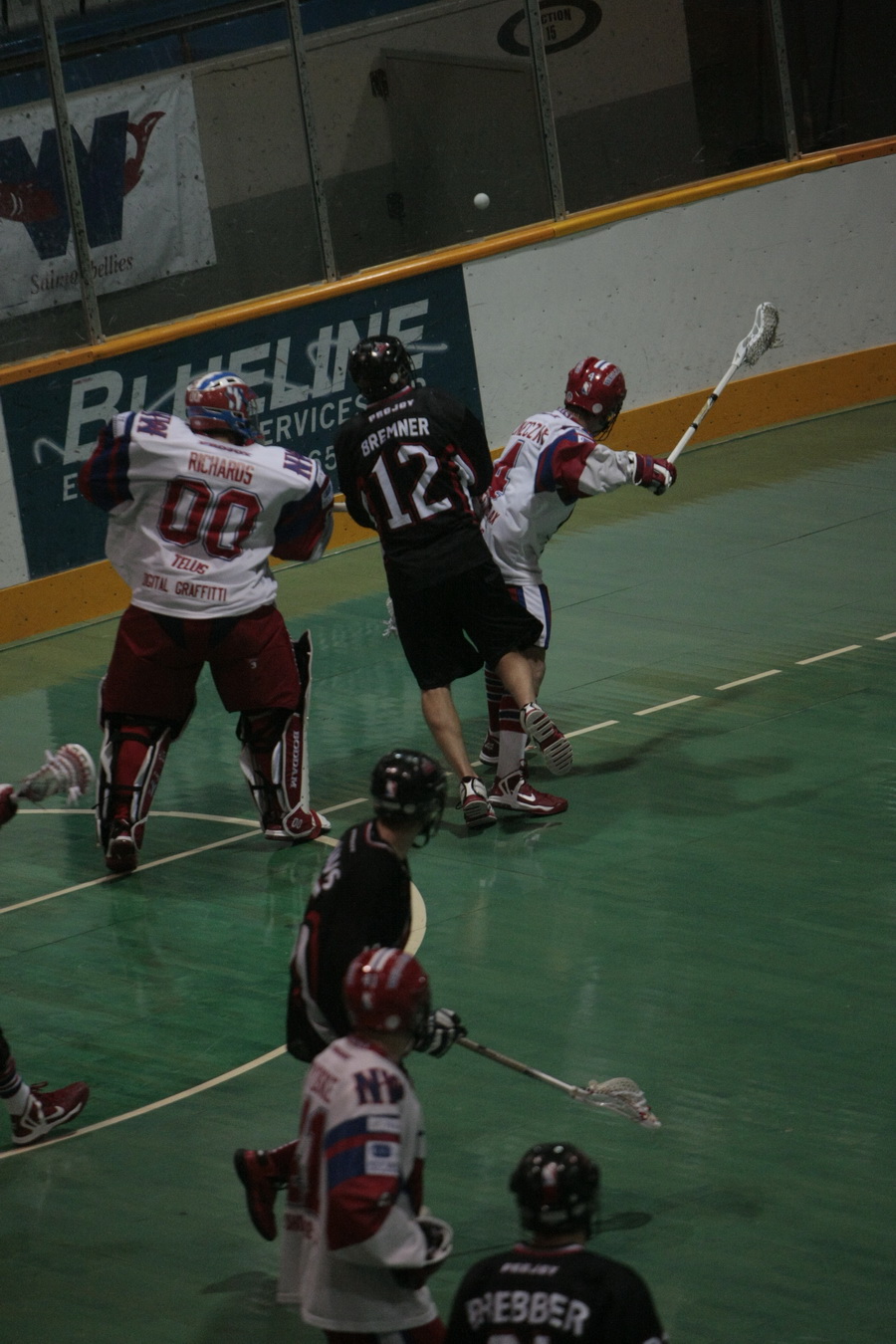
- Body Checking/Body Contact/Bumping (See Practice Plan #8): Used to slow up an opponent with or without the ball, body checks must be above the waist and below the neck. A body check is when a player turns slightly and drives their lead shoulder (“lead leg, lead shoulder”) into an opponent’s chest, sometimes going shoulder-to-shoulder (body-to-body).
- Cross-Check/“Push” Check/Place & Push/Push & Steer/Blocking (Defending) A Cross-Check (See Defense Drill #1): A cross-check is the most fundamental form of defense in lacrosse, but must be utilized under control ("controlled aggression"). Essentially, a cross-check keeps a player’s check in front of them, but it is otherwise used to separate an offender from the ball, or to clear an offender out of a certain area (the middle).
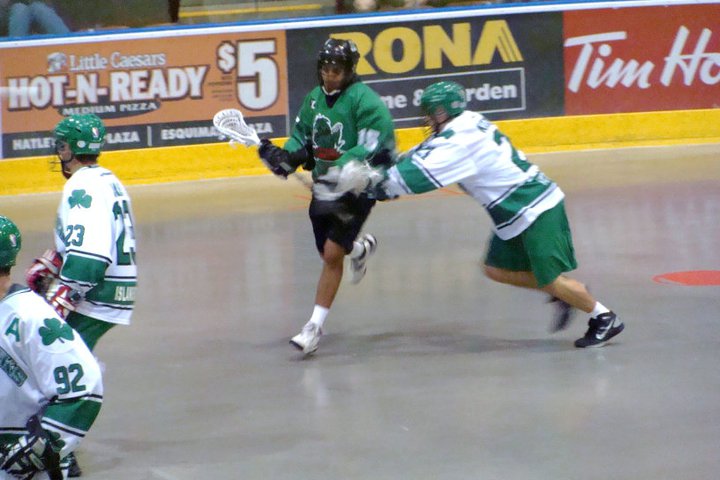
- Getting On Gloves/Getting On Hands (See Defense Drill #9): Whether defending on-ball or off-ball, it is a good habit to always be “on gloves.” Short slashes, cross-checking, poking and hooking are all examples of little things that can be done to potentially disrupt the flow of an offensive player.
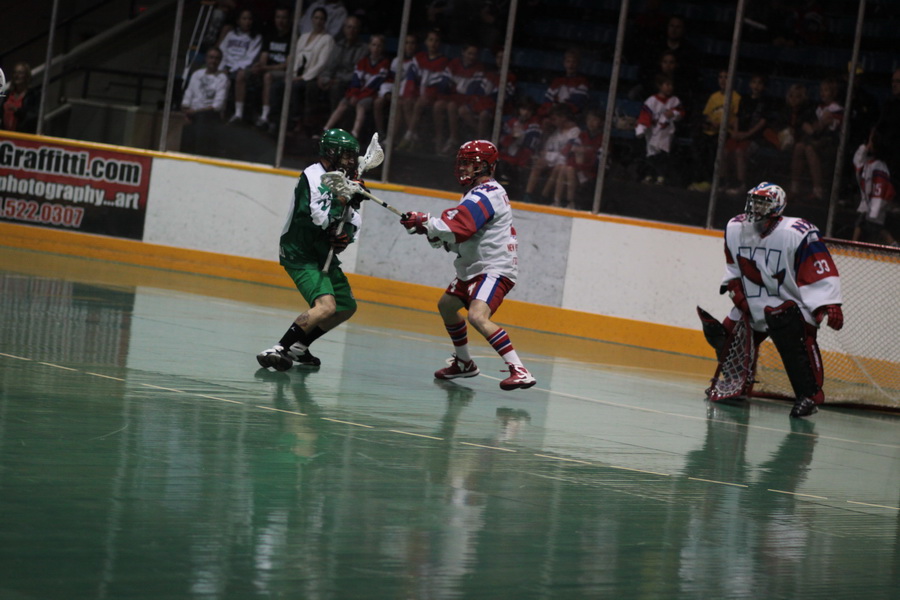
- Slashing/Hacking/Stick Checking/"Slap" Checking (See Defense Drill #9): A method for trying to dislodge the ball off of an opponent. Defenders should “slash” the ball carriers’ stick/hands (“get on hands”) to prevent them from executing a good pass or shot while closing the gap.
- Cross-Handed Slashing (See Defense Drill #9): When a left-handed defender is checking a left-handed offender (same-handed), and vice-versa, the defenders stick is underneath the offender (board-side), instead of the top-side. In this situation the defender uses a slightly different slashing technique, known as the “cross-handed” slashing. This technique sees the defender reach “across their body” with both hands on the stick, slashing back towards their proper side (sometimes accompanied by a poke or slight hook). Essentially, this movement mimics the regular slashing action, except inverted (usually from high to low); requiring excellent footwork and "top-side positioning" before a slash attempt would even be warranted.
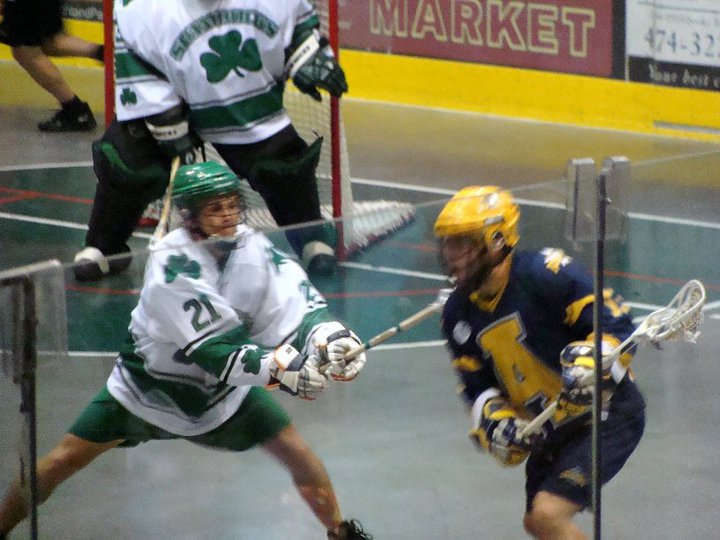
- Poking/“Poke & Lift”/Can-Opener: A poke check is when a defender points their stick at an offender’s chest/stick and thrusts it forward with their bottom hand. At the same time they can also push their stick through their upper hand, which forms a hollow circle on the stick (for better accuracy and control); or otherwise execute the poke with one hand on the stick.
- Hooking (See Defense Drill #7): When an offender is a step ahead on their way to the net or in transition, defenders can use a backhand stick technique known as hooking. At about waist height, the defender places their stick and forearms straight out in front (or to the side), forming a “V” in relation to the opponent.
- "Stripping"/Forced Turnover/Take Away Check/Helicopter Check/"Yard Sale": If a player dislodges the ball from another player, they have “stripped” the opponent of the ball. A “forced turnover” and "take-away check" are other ways to reference successful stick checks, but forced turnovers also refer to picking off passes.
- “Flip” Check/Overhead Check: If a player keeps their stick hanging out too far, not protecting the ball, they are at risk of getting stripped with the “flip check.” A good defender looks like they are going to cross-check their opponent, but then suddenly takes one hand off of their stick, goes over the player’s head (not touching the player with their other hand - see wrap-around penalty) and comes down on the opponent’s stick, stripping the ball. This is a risky play by a defender, and should be discouraged by coaches, but if timed appropriately, can be effective against certain players (usually defenders).
- Ice-Pick Check: With one hand on the stick just below the stick head (see one-handed cradling) an “ice pick” is a stick check, using the bottom portion of the stick ("butt-end") in a downward thrusting motion.
- Rusty Gate Check: Done usually out of desperation or as a last resort after being beaten one-on-one, a “rusty gate” is a one-handed reverse slash, thrown behind a defender’s own back. If an offender “fakes” a “juke” one way, and gets a defender to over-commit, then goes the other way, a rusty gate check is a one-time opportunity to slash the player’s hands and perhaps get lucky and strip the ball. It is usually not worth the risk of getting a penalty for an errant slash, but advanced players will sometimes be able to get away with it.
- “Stick Swinging”/One-Handed Defense: Defenders should not get caught or mesmerized by the actions of a players stick, nor get caught playing defense with one hand on their stick. As a default fundamental defensive principle, cross-checking comes before stick checking. The offenders’ stick should certainly be accounted for (shooting lanes), but no defense is better than physical “man-to-man” coverage using top-side positioning and two-hands, while also prepared to help. A defenders primary responsibility is to contain their check, only when the defender is completely balanced and in perfect position should they try for a strip.
- Over-Checking/Over-Aggressive: A lot of times less is more while playing defense, but that doesn’t discount the importance of “being physical.” Sometimes keeping one’s centre of gravity and balance is more important than going for a big cross-check, body check, slash or strip. The “over-aggressive” defender is much more susceptible to being “dodged” while off balance, and also more likely to take a penalty. Keeping one’s stick on an opponent (clamping) as a guide and using the “2-for-1 rule” is usually the most effective strategy, unless trying to physically punish an opponent or “blow up a pick.”
- Chasing (See Transition Drill #10A): Pursuing a loose ball or a player that is on a breakaway or fast-break, or running after an offender after having been “beaten clean” by an offender, is referred to as “chasing.”
- Trail Check (See Defense Drill #8): If a defender is cleanly beaten and the offensive player has a direct path to the goal, the defender should first work hard to regain position (recover), and then wait to time a “trail check” when the offensive player cocks their stick back to shoot.
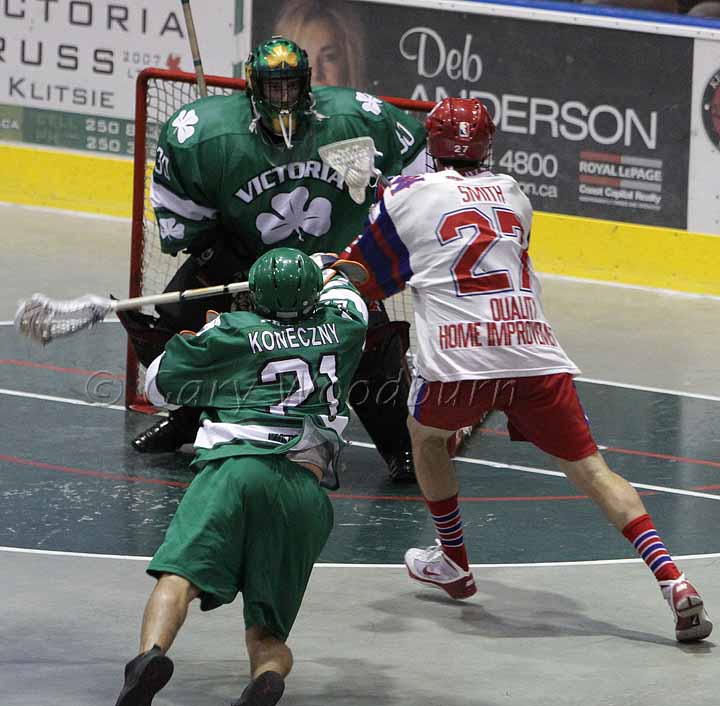
- Sagging/“Sluffing”/Shading/Hedging/“Hot” Defender/“Help” Defender/Showing Help (See Defense Drill #13B): When a defender moves away from their check, a few steps toward the middle, in order to be in better position to slide over and help out a teammate, rotate, or simply to “show help.”
- Adjacent/Adjacent Help (See Defense Drill #12A): A player closest to, or directly beside another teammate, whether on offense or defense.
- Help (See Defense Drill #13B): Leaving one’s check to slide over and help a teammate defend their check. Helping should be done only if needed, otherwise “showing help” can also be utilized. The sliding (helping) player must be sure to body-check their opponent (finish their check), as a team rule.
- Slide/Multiple Slides/"Following The Slide" (See Defense Drill #13B): If a teammate gets beat toward the net on defense, that same player should yell “help” and the next closest defender should “slide” over to help defend the ball. The one exception to this team rule is when defending the crease position, as players should in general never slide from the off-ball crease (a diagonal quick stick is usually the result).
- “Go”/"Selling Out" (See Playbook): A cue or cues recognized by defenders or the goalie (see goalie communication), which triggers a player (or players) to pressure the ball, slide or rotate in an attempt to interrupt the flow of an offense (See Rotating Box).
- Hitching/Fake Slide (See Transition Drill #7A): When sliding or “finishing a check,” the less obvious the defender makes the move, usually the more effective it will be (except when forced to slide or sliding out of desperation). "Hitching" is a fake slide, where the defender acts like they are going to slide one way, then slides another. Hitching can also be referred to as an offensive footwork maneuver, similar to a stutter-step.
- Goading/Chicken/“Cat & Mouse” (See Offense Drill #8): This is when a defender invites or encourages a player to try to get to an area of the floor, at the same time shadowing them and closing the gap as they begin to become “a threat.”
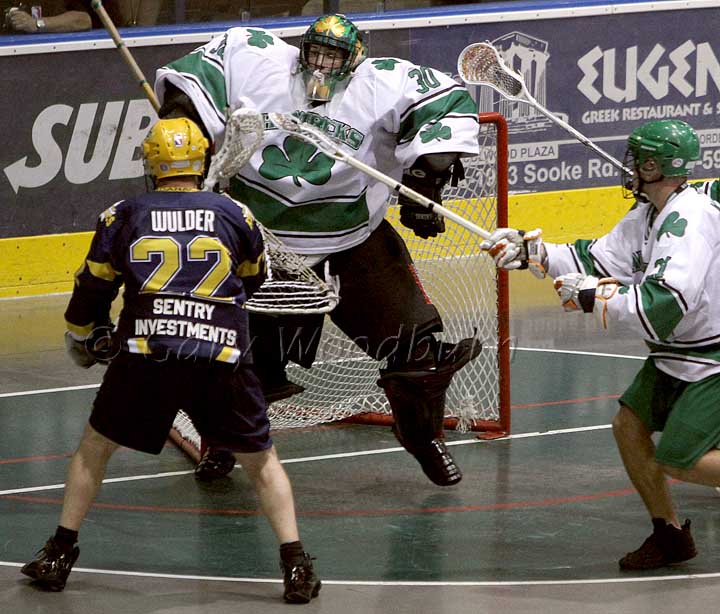
- Closing The Gap/Closing Out/Gap Control/Gap Space (See Defense Drill #4): Closing the gap is when the defender rushes out at a ball carrier, applying aggressive pressure in preventing them from having time & space to execute a high percentage shot, usually off of a diagonal "skip" pass. The defender must close (shorten) the "gap space" between themself and their check with speed, while still “arriving in control,” with a stick up and not “over-committing.”
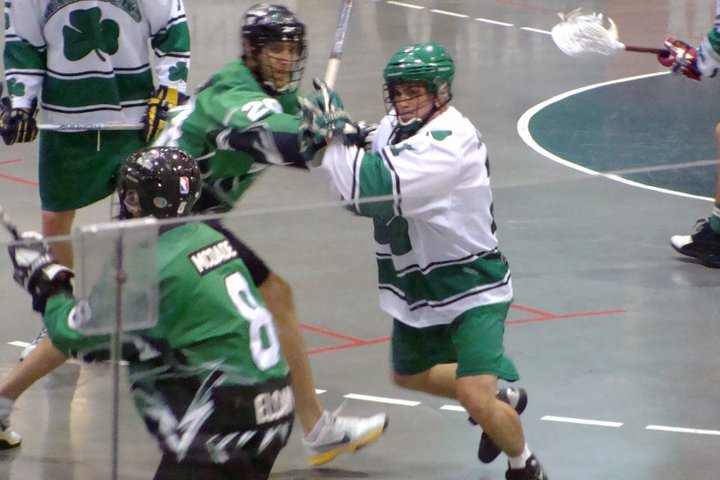
- Finishing Your Check: It is a good habit to always “finish your check” when playing defense. Specifically, whenever your check passes or shoots the ball, they should always be body checked or cross-checked if the offender is less than 1 second away.
- Rotation/Rotating (See Playbook): Usually as part of a set-play on defense or a defensive system, a rotation is a series of slides, usually starting with on-ball pressure and a “go” call. Locking off adjacent outlets is usually the next priority, taking away the easiest passes offenders might look for when pressured.
- “Hold”: The opposite of rotation, “hold” is the call communicated by defensive players when, for a particular reason, they don’t want to rotate where they otherwise normally would. “Holding” is usually called following multiple skip passes by the offense, while playing in a zone defense.
- Pressure/Forcing/Firing Out/“Aggressive” Pressure/Strip Defense/Controlled Pressure/“Soft” Defense: To “force” someone to do something; giving them no choice. “Aggressive pressure” by the defense is sometimes needed in order to force a turnover when a team is losing late in a game. Sometimes in practice "soft" defense will be asked of the players (for offensive purposes). Generally, "controlled pressure" is the best approach.
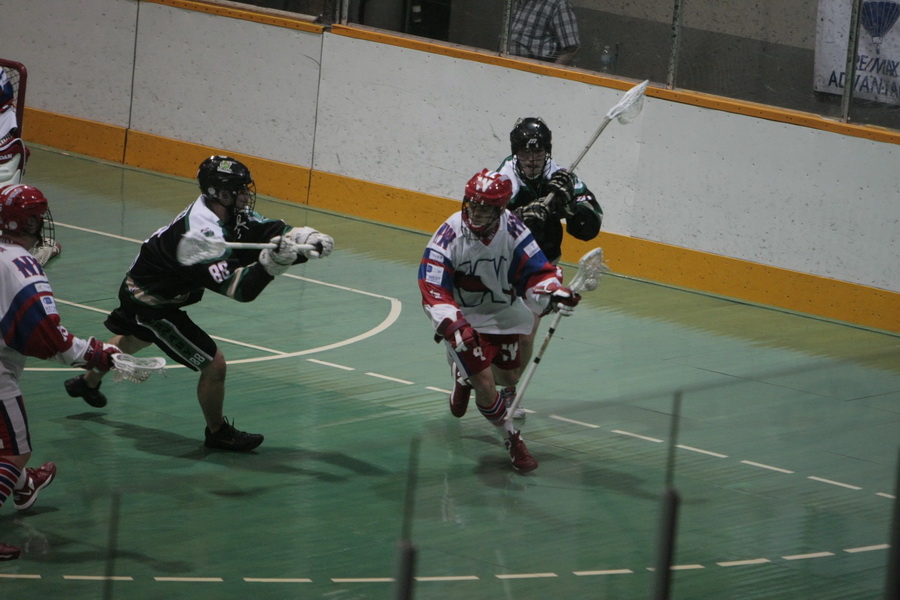
- Arriving In Control/"Coming To Balance" (See Defense Drill #4): When “closing the gap,” applying pressure or rotating, it is important for a defender approaching their check to do so “in control.” Regardless of the amount of speed needed to close the gap, upon approach the defender should be prepared to slow down as quickly as possible, getting low and "coming to balance;" prepared for body contact or change of direction.
- Over-Committing/Lunging/Over-Extending: When a defender takes a straight run at an opponent and “over-extends” themself in an attempt to body check, slash, or cross-check them, it is referred to as “over-committing” and usually results in that defender being left out of position.
- Getting “Beat”/“Beat Clean”: Getting “beat clean” is when an offensive player gets around their check one-on-one toward the net (off-ball or on-ball), relatively untouched.
- Recover/Retreat: After pressuring the ball, showing help or accidentally over-committing on a check, defenders need to be able to get back into position, which is known as “recovering.”
- Contain/“Backing Off”: Having good defensive position (top-side) on an offender (check) without significant aggression or pressure, and instead waiting for the offender to approach, is called “containing.” This concept helps eliminate the potential of being cleanly beaten by the ball carrier; erring on the side of defense. Defenders are usually in a closed stance while containing, without ever over-committing.