
Offense-Defense (Platooning) System
 INTERMEDIATE TRANSITION SYSTEM
- The Offense-Defense system is a one-way style of play that involves sending a team’s best defenders out to play defense (defensive specialists) and best offenders out to play offense (offensive specialists). Having said that, the golden rule when your team is not in possession of the ball is that you are a defenseman, and if your team is in possession of the ball you are an offensive player.
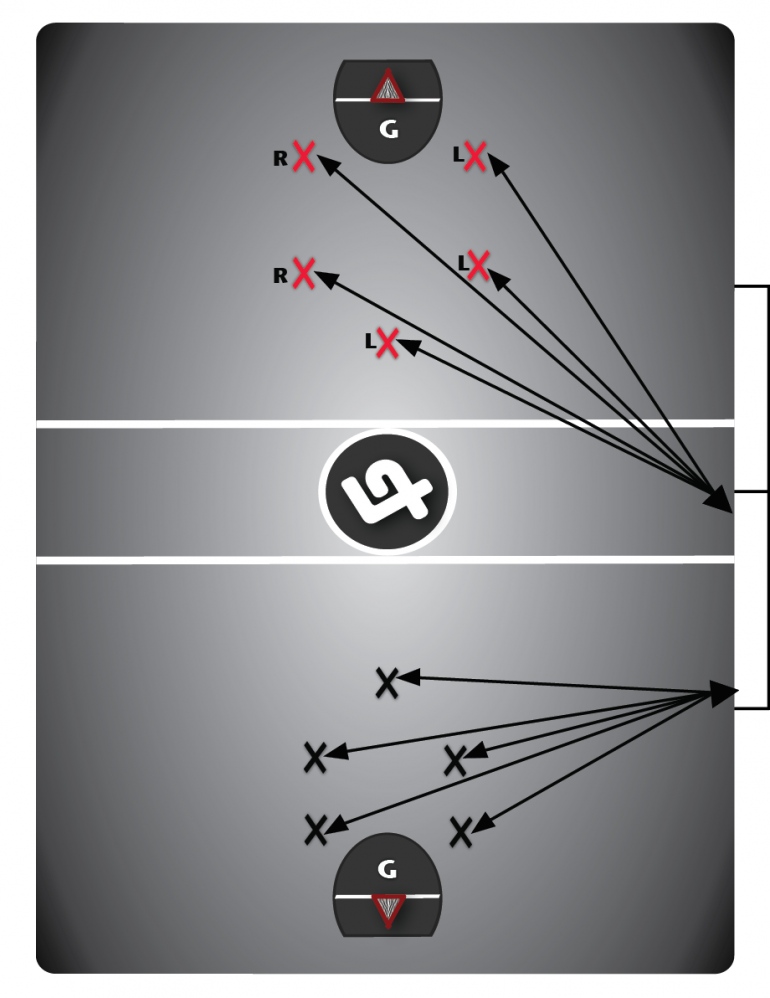
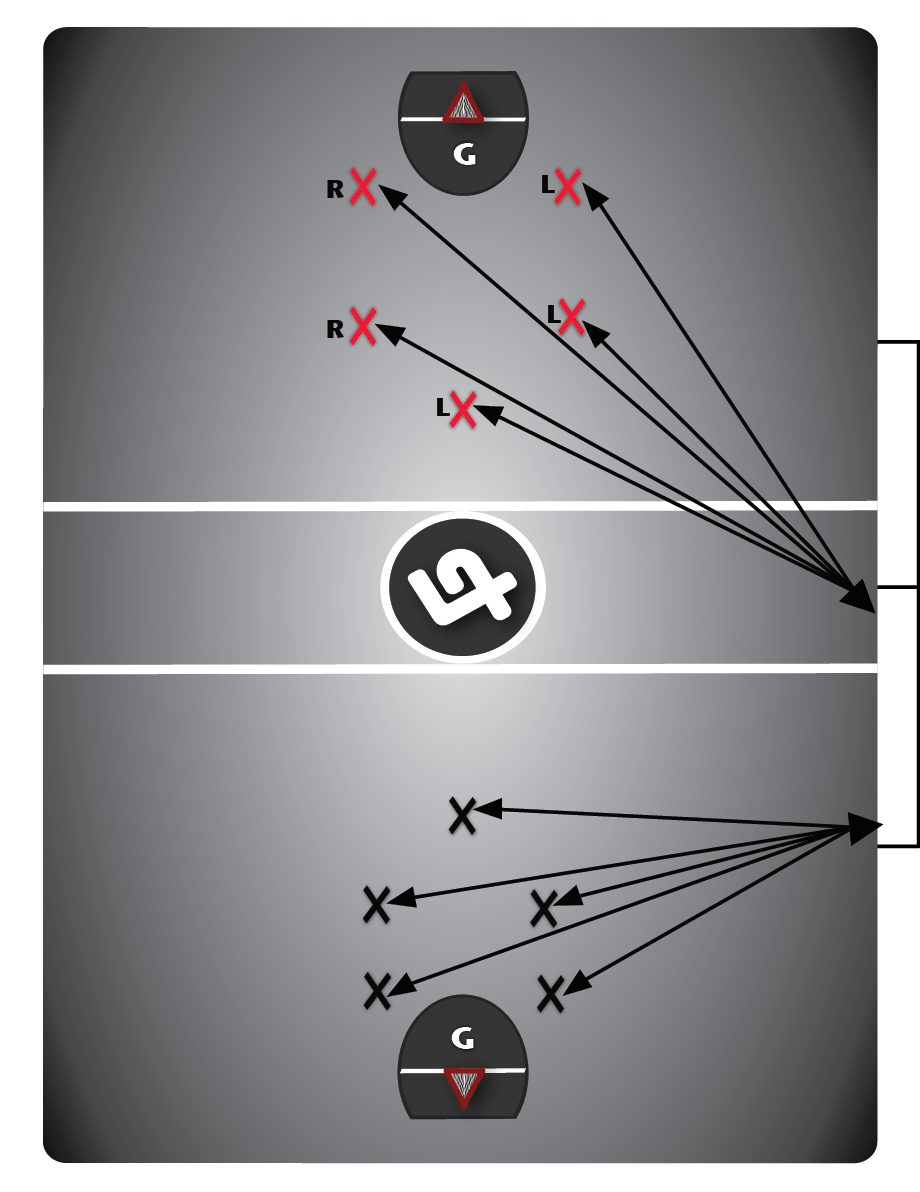
- Usually there are more defensive specialists dressed than offensive specialists, with a maximum of 18 runners total on each team (10+8, 11+7 or 12+6). When a defender (or the goalie) obtains the ball in the defensive zone, players should get into the Standard Breakout positions.
- The player who receives the pass and the closest teammate should then run the ball deep into the offensive zone “in pairs,” supporting each other as outlets while the rest of the defenders change and the offensive players run hard onto the floor.
- If the transition was slow-breaking and there is not a lot of time left on the shot clock (16 seconds or under) after this happens, the transitioning defenders should stay and play offense. "Transition specialists" are ideal for filling this role and they should always be encouraged to seek out fast-breaks, with all defenders striving to be able to safely carry the ball into the offensive zone and still have the endurance/offensive understanding to be effective, where required.
When the opposing team gets possession of the ball on defense, offensive players should sprint off the floor, with one or sometimes two players (usually on the far-side from the bench) guarding against reverse-transition, if needed.
This type of offense-defense strategy should ideally not be implemented until the Midget/Junior level of lacrosse, giving younger players the chance to focus on their overall skill development.
Advantages of this transition system include getting more reps and arguably better chemistry within smaller units of players, also the ease at which set-plays can be implemented within these groups.
Would you like to share your thoughts?
Your email address will not be published. Required fields are marked *
Leave a Reply
You must be logged in to post a comment.
Would you like to share your thoughts?
Your email address will not be published. Required fields are marked *
Leave a Reply
You must be logged in to post a comment.
0 Comments